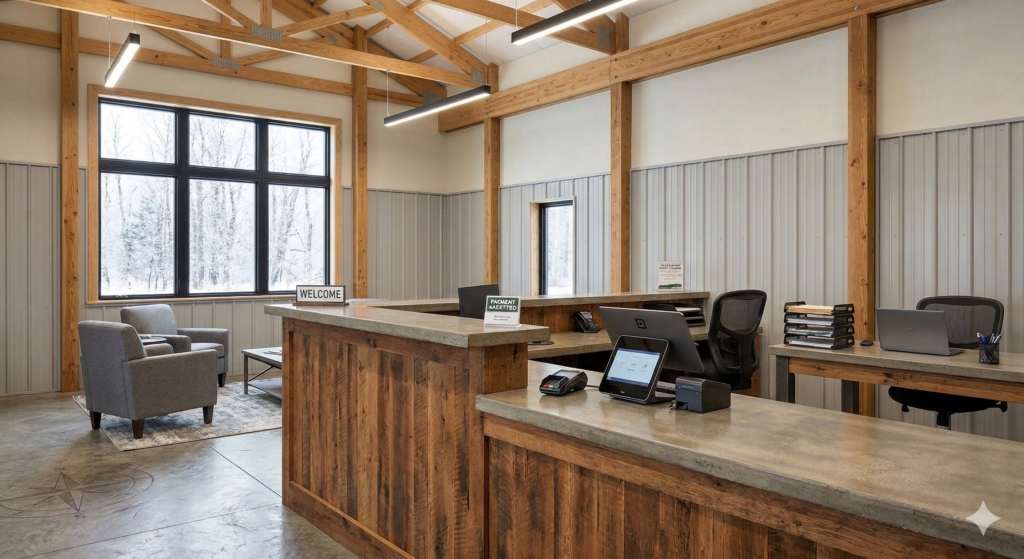
When you see a post frame building from the outside, it is easy to focus on the sharp lines of the metal siding and the impressive pitch of the roof. However, for a business owner, a hobbyist, or a farmer, the interior is where the true value of the investment is realized. Because post frame construction offers wide-open spans and deep wall cavities, the interior is essentially a blank canvas. Unlike traditional stick-frame buildings, which are often cluttered with load-bearing interior walls, a post frame structure gives you total control over how you define your workspace.
Transforming that “shell” into a high-performance environment requires moving beyond basic storage and thinking about the specific demands of your daily operations. From climate control to heavy-duty durability, the way you finish your building determines its comfort, longevity, and professional utility.
1. High-Durability Wall Liners: Steel and Beyond
In a commercial or agricultural setting, standard drywall often isn’t enough to handle the daily wear and tear. Heavy equipment, moisture, and chemical exposure can quickly degrade a residential-grade finish.
- Steel Liner Panels: This is the “gold standard” for workshops and equipment bays. Pre-painted steel panels are installed horizontally or vertically on the interior walls and ceiling. They are incredibly durable and practically maintenance-free. Because they have a high-gloss finish, they reflect light beautifully, making the workspace significantly brighter and safer without adding more light fixtures.
- Plywood or OSB Backing: For shops where you plan to hang heavy tools, cabinets, or specialized racks anywhere on the wall, finishing the interior with 3/4″ plywood or OSB provides a rugged, “screw-anywhere” surface. It adds extra shear strength to the building and can be painted to maintain a professional look while offering maximum utility.
2. High-Performance Flooring: More Than Just Concrete
The concrete slab is the foundation of your work, but it doesn’t have to be the final surface. Depending on your industry, specialized floor finishes can improve safety and floor longevity.
- Epoxy and Polyaspartic Coatings: Ideal for commercial showrooms, automotive shops, or laboratories, epoxy creates a chemical-resistant, non-slip surface. It prevents oil, salt, and fluids from staining the concrete and makes cleanup a breeze.
- Densifiers and Polished Concrete: For a modern, industrial look in a retail or office setting, polishing the concrete offers a high-end aesthetic that is nearly maintenance-free. A densifier treatment can also reduce “dusting” in large warehouses, keeping your inventory cleaner.
3. Integrated Mezzanines and Lofts: Maximizing Vertical Space
One of the greatest benefits of the post frame design is the ability to easily accommodate high ceilings (often 16 to 20 feet or more). This height allows you to effectively double your square footage without increasing the building’s footprint or your property tax assessment.
- Parts and Inventory Storage: A mezzanine allows you to keep the main shop floor clear for moving large equipment while shifting your parts inventory, seasonal supplies, or archives upstairs.
- Integrated Offices: Many business owners use a mezzanine to build a climate-controlled “bird’s nest” office. This elevated space provides a quiet area for management and client meetings while allowing the manager to maintain a visual line of sight over the entire shop floor.
4. Advanced Lighting and Utility Routing
Efficiency is found in the details. A high-performance workspace should be designed with “plug-and-play” utility access to avoid a cluttered and dangerous floor.
- LED High-Bay Lighting: Modern LEDs provide daylight-quality illumination while drawing a fraction of the power of traditional metal halide lamps. Proper lighting placement reduces eye strain and prevents accidents in busy work zones.
- Overhead Utility Drops: Instead of tripping over hoses and extension cords, a professional interior plan includes overhead drops for compressed air and electrical power. This keeps the floor clear for safety and allows for easier movement of vehicles and materials.
5. Insulation and Acoustic Comfort
Finally, a high-performance workspace must be comfortable. Because post frame walls have large, deep cavities (6″ to 8″ or more), they can hold massive amounts of insulation.
- Mineral Wool or Fiberglass Batts: These provide excellent thermal resistance and, perhaps more importantly for a workshop, significant sound dampening.
- Acoustic Steel Ceiling Panels: If you are running loud machinery, using perforated steel panels on the ceiling with an insulation backing can drastically reduce the “echo” inside the building, creating a much more pleasant and professional environment for employees and customers alike.
By thinking “beyond the shell,” you transform a simple building into a specialized tool that enhances your productivity, protects your assets, and reflects the professional quality of your brand.