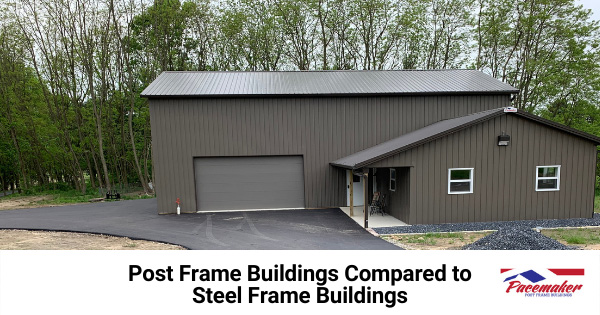
When a farmer or commercial owner decides to build a large-scale storage facility, the debate usually boils down to two options: an all-steel Pre-Engineered Metal Building (PEMB) or a wood-framed post frame building. On the surface, both look similar once the metal siding is attached. However, the structural skeleton—steel versus wood—behaves very differently when faced with the unique challenges of agricultural use.
For high-humidity environments, such as hay storage, grain facilities, or livestock housing, the choice of a wood-framed post frame system offers significant physical and financial advantages.
The Condensation Challenge: Wood vs. Steel
The primary enemy of any storage building is moisture. In high-humidity agricultural settings, “interior rain”—condensation that forms on the ceiling and drips onto your assets—is a constant threat.
- Thermal Conductivity: Steel is a highly efficient conductor of heat and cold. In the winter, cold outside temperatures travel directly through a steel frame to the interior. When warm, moist air inside the building (from curing hay or animal respiration) hits that freezing steel, it liquefies instantly.
- The Wood Advantage: Wood is a natural insulator. It has a much lower thermal conductivity than steel. A wood post and truss system stays closer to the interior air temperature, which significantly reduces the “dew point” effect. This natural thermal break helps keep your interior dry without relying entirely on expensive, high-powered ventilation systems.
Durability in Corrosive Environments
Agricultural storage often involves more than just water; it involves chemical reactions. If you are storing fertilizers, salt, or housing livestock, the air inside your building can become corrosive.
- Corrosion Resistance: Steel frames are susceptible to rust and corrosion when exposed to the ammonia found in livestock waste or the chemicals in fertilizers. Even treated steel requires specialized coatings that can fail over time.
- Organic Resilience: Wood is naturally resistant to the corrosive effects of ammonia and many common agricultural chemicals. While the metal siding on the outside of the building is the same for both types, the structural “bones” of a post frame building are far more durable in these harsh, high-moisture chemical environments.
Flexibility for Equipment and Maintenance
A farm or commercial building is a tool, and tools need to be adaptable. Post frame construction offers a level of “user-friendliness” that steel cannot match.
- Simplified Modifications: In a wood-framed building, it is simple to add a workbench, mount tool racks, or run new electrical conduits. You can nail or screw directly into the wood posts and girts. In a steel building, any modification typically requires specialized welding or drilling into heavy-gauge beams, which can compromise the structural integrity or factory coatings.
- Ease of Repair: If a piece of heavy machinery accidentally backs into a support post, repairing a wood post is a straightforward task for a professional crew. Repairing a structural steel member often involves expensive specialized labor and heavy equipment, leading to longer downtime for your facility.
The Bottom Line: Protecting Your Yield
While all-steel buildings have their place in high-rise or heavy industrial applications, the specific needs of the agricultural and commercial storage sectors favor the wood-framed post frame model. By choosing post frame, you are investing in a building that breathes better, resists corrosion naturally, and provides a drier environment for your equipment, grain, or livestock.
In the long run, the “Building Green” benefits of wood aren’t just about the environment—they are about the “green” in your wallet, saved through lower maintenance and better protection of your valuable agricultural assets.