For business owners and farmers, long-term operational costs can significantly impact profitability. While the initial construction price is important, the monthly expenses associated with heating, cooling, and lighting a large structure often represent the true financial drain over the building’s lifespan. This is where post frame construction presents a clear, sustainable advantage: it is inherently designed to be one of the most energy-efficient construction methods available today.
The Green Energy Advantage: Why Post Frame Excels
Post frame buildings utilize a structural design that is fundamentally superior to traditional stick-built or metal-framed structures when it comes to insulation and thermal performance.
1. Optimal Cavity for Insulation
The most significant energy advantage lies in the wall design. Traditional framed buildings rely on studs placed every 16 or 24 inches. Every one of these studs creates a thermal bridge—a pathway for heat to escape in the winter or enter in the summer.
Post frame structures, however, utilize large structural posts placed much further apart (typically 8 to 12 feet). This wider spacing allows for the installation of thicker, continuous blankets of insulation between the posts. This dramatically reduces thermal bridging, creating a more uniform thermal barrier across the entire wall and resulting in a much higher effective R-value.
2. Airflow and Vapor Barrier Control
Air leaks are a major culprit in energy waste. Because post frame construction uses fewer pieces of framing lumber in the walls and relies on large panels for cladding, it is naturally easier to seal the building envelope.
- Tighter Envelope: A professional post frame builder meticulously applies specialized sealants and flashing during installation. This creates an airtight envelope that minimizes uncontrolled air exchange, meaning your heated or cooled air stays inside where it belongs.
- Moisture Management: Controlling moisture is key to efficiency and material longevity. Post frame buildings are well-suited for incorporating a continuous vapor barrier (or moisture barrier) on the warm side of the insulation, preventing condensation that can damage materials and degrade insulation performance.
3. Strategic Roofing and Natural Lighting
Energy efficiency extends to the roof and daylighting strategies, both of which are easily integrated into a post frame design.
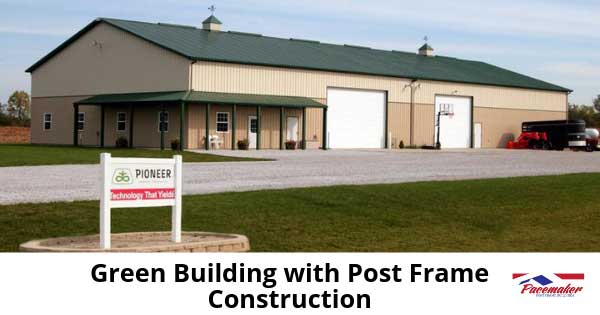
- Cool Roof Systems: Metal roofing, a standard component of most post frame buildings, is available in light colors and highly reflective coatings. These “cool roof” materials reflect solar energy away from the building, significantly reducing the heat load during the summer months and cutting down on air conditioning costs.
- Daylighting Integration: Post frame construction easily accommodates strategically placed windows, skylights, and even translucent wall panels. These elements allow ample natural light to penetrate deep into the structure, reducing the need for artificial lighting during the day. For a large workshop or commercial storage facility, this alone can result in substantial energy savings.
The Savings: Sustainable Returns on Investment
Choosing post frame construction delivers tangible financial returns that compound over the life of the building:
| Efficiency Feature | Long-Term Financial Benefit |
| Reduced Thermal Bridging | Lower monthly heating and cooling costs |
| Tighter Air Seal | Reduced load on HVAC systems; less wear and tear |
| Cool Metal Roofing | Lower summer cooling costs and greater material longevity |
| Daylighting | Lower electrical consumption for lighting |
By capitalizing on the inherent design advantages of post frame—from the continuous insulation capacity to the airtight envelope—business owners can build a structure that is not only robust and versatile but also a sustainable, long-term asset that reduces overhead and contributes to a greener bottom line.